

Getting To Know: Gander, The Setting of Come From Away
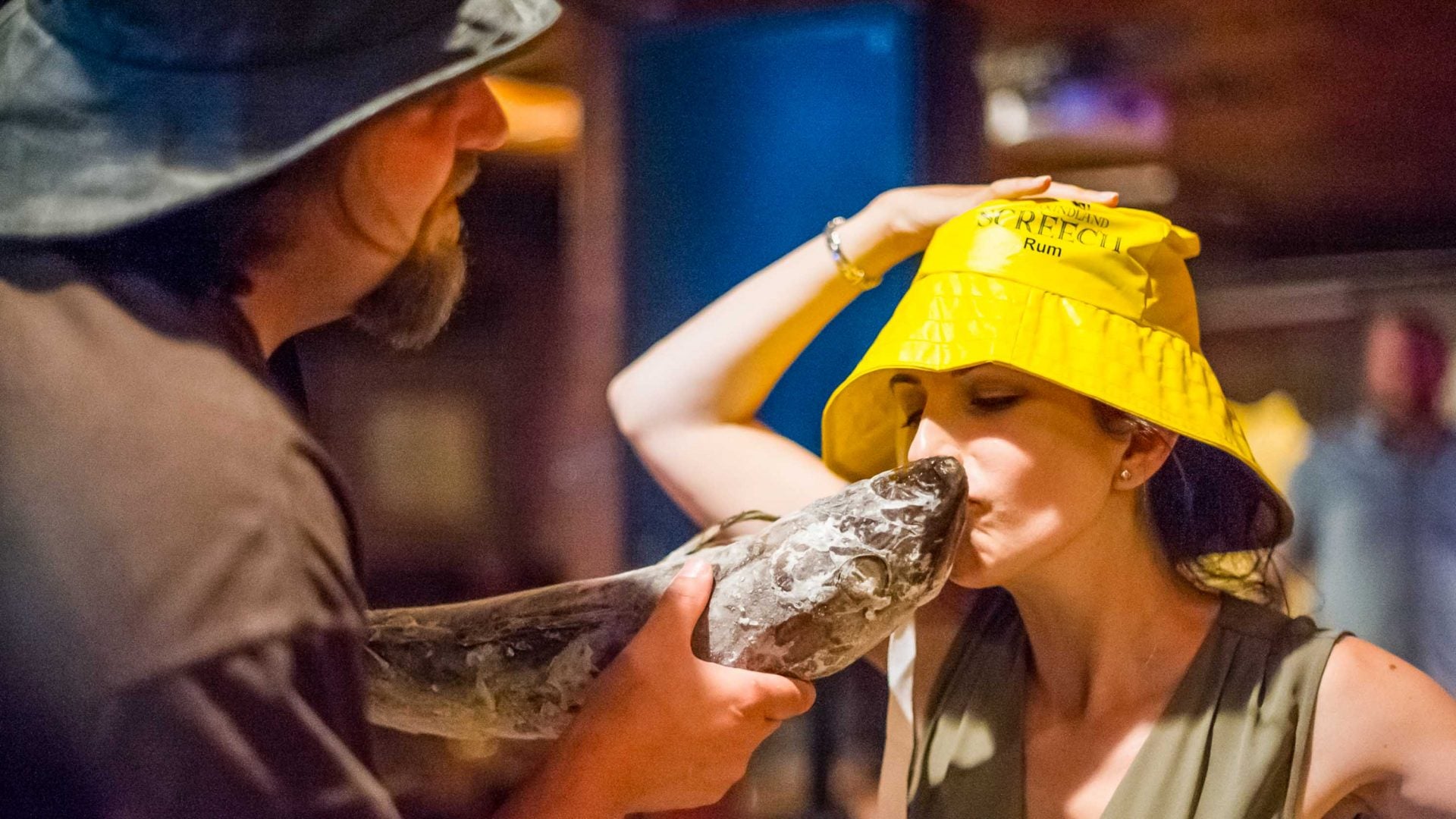
Before the events of 9/11 that made an imprint forever on the little town of Gander, Newfoundland and Labrador, it had previously made a mark as the “Crossroads of the World.” Read on to learn more about this little town with its quirky local culture that embraces welcoming all through radical hospitality, and kissing dead fish. Then come see Gander brought to life in our musical production of Come From Away. Read more about it at the production webpage.
History
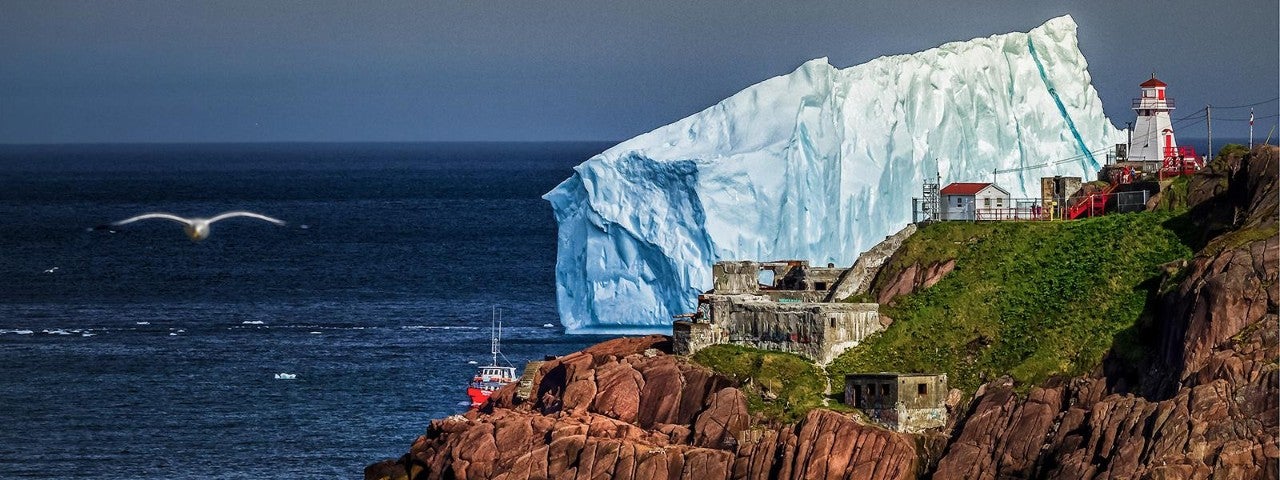
In 1935, an airport was constructed in Gander, Newfoundland, due to its geographic northeast location on the tip of North America (the province of Newfoundland and Labrador). This place was chosen as a strategic transatlantic refueling stop between Europe and North America due to it being the shortest flight route from London to New York, as the world anticipated the start of World War II.
Captain Douglas Fraser landed the first flight at Newfoundland Airport (now known as Gander International Airport) on January 11, 1938. When World War II happened, the town became a strategic post for the Royal Air Force Ferry, who were tasked with delivering thousands of aircraft coming from North American factories to front-line war operations throughout Europe, North America, and the Middle East. Up to 12,000 British, Canadian, and American military servicepeople crammed together in the tiny town, living in crowded barracks between the runways.
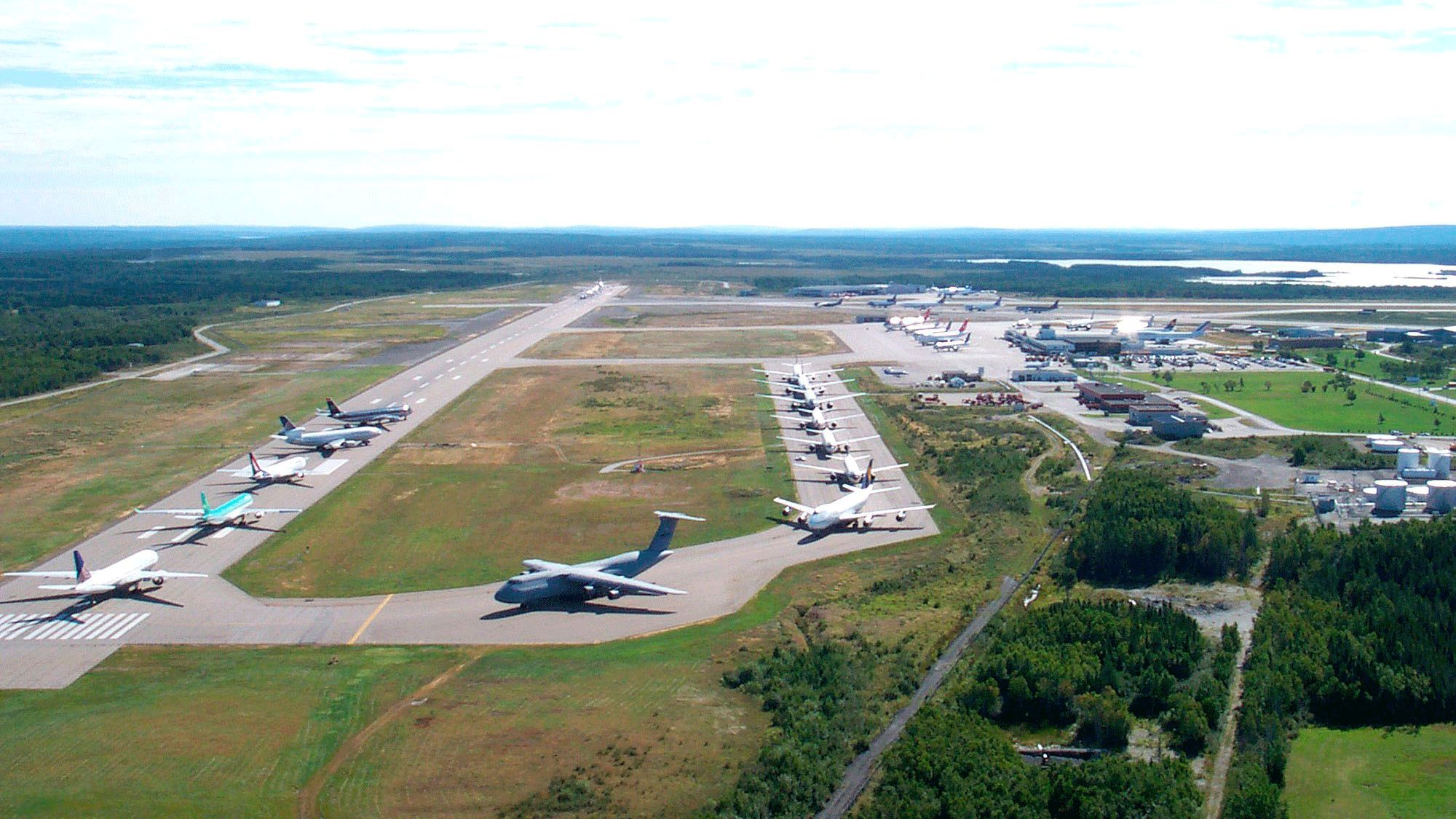
After the war, efforts were made to move the Gander residents to safer spaces further from the airport, and construction began on the current site of the town in the 1950s. Due to its strategic location as a refueling stop for planes headed between Europe and North America, Gander was nicknamed the “Crossroads of the World,” and served an important role during the Cold War as a hub of commercial transatlantic aviation.
Culture
Because people ended up in Gander from so many different countries, its population is internationally diverse and includes people from countries on five different continents. Primarily English-speaking, many people also speak French. Culturally, Newfoundland is considered to be one of the friendliest places on Earth, and residents are known to treat non-Islanders as if they are family.
Some local traditions included mummering, which is dressing up in disguises and going from house to house as people guessed their identities, kitchen parties and quirky welcoming customs (described further below), and eating local favorites like fried bologna, fish chowder, and moose stew.
 Some local traditions included mummering, which is dressing up in disguises and going from house to house as people guessed their identities, kitchen parties and quirky welcoming customs (described further below), and eating local favorites like fried bologna, fish chowder, and moose stew.
.
Kitchen Parties
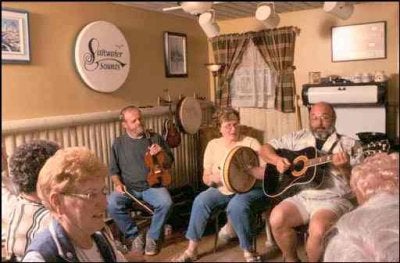
In Newfoundland, a popular tradition is the kitchen party that dates back to Irish and Scottish settler groups hosting cèilidhs (Scottish)/céilís (Irish) (pronounced “KAY-lees”). These casual, communal gatherings involve singing, dancing, storytelling, playing instruments, and sharing food with friends andneighbors, typically in someone’s home.
While Celtic-inspired music is played, traditions like “kissing the cod” (literally kissing a dead codfish) happen, with modern kitchen parties serving such delicacies as fried bologna alongside traditional foods like fried cod tongues and toutons, which are fried leftover bread balls served with molasses. In Come From Away, the residents and passengers join together in a large version of these celebratory kitchen parties.
Learn more about Gander and Come From Away by reading the Study Guide!