

The Magic You Don’t See: A Look Behind the Curtain
The Magic You Don’t See: A Look Behind the Curtain
By John Fraser, Vice Chair, Board of Directors
A live theatre experience is something we all should experience. Live theatre is more than just a story, or singing, or dancing. It pulls us out of our seats and reminds us what it means to be human—joy, sadness, laughter, love, and empathy—all revealed in just a few hours.
Disney’s Frozen, recently on stage at the Arvada Center, is a powerful example of that magic. You don’t have to be a child to get swept up in the voices, choreography, and spectacle on stage. The performances, sets, costumes, and special effects are among the best in the region. But what truly changed my perspective was seeing what happens behind the scenes.
I recently had the opportunity to peek backstage during a performance of Disney’s Frozen, and it gave me a much deeper appreciation for what it takes to make live theatre happen night after night. The first thing I noticed was how small and crowded the spaces behind the curtain really are. The stage is massive, but backstage and underneath it are anything but.
All the music you hear is performed live. You may notice the conductor’s head poking out of the orchestra pit like a musical version of Punxsutawney Phil, but what you don’t see are the six other musicians tucked under the stage—keyboards, horns, guitars, and even a full drum kit—packed into a space no bigger than a kitchen. Despite the tight quarters, they create a rich, full sound every night, escaping the real world just as the audience does.
Backstage is a maze of cables, pulleys, hydraulics, and moving scenery that shift backdrops, rotate the stage, and deliver seamless transitions. Video monitors, control terminals, and communication systems are positioned perfectly so the crew can trigger effects at exactly the right moment. All the audience sees is the magic, but behind it are months of planning and weeks of rehearsal.
Once you’re absorbed in the story, you hardly notice scenery rolling on and off stage. I didn’t realize that any set piece on wheels is called a “wagon,” and all are built by Arvada Center craftspeople—carpenters, welders, painters, and electricians—right here in our production shops. Behind every wagon is a crew member moving it into place, locking wheels, clearing paths, and preparing the next scene. In Disney’s Frozen, that includes everything from beds and trading posts to a princess’s ice castle.
Watching from the sound and lighting booth revealed yet another layer of artistry. Nearly 500 lighting changes occur during the show, guided by a team of specialists and orchestrated by the stage manager, who calmly calls cues with astonishing precision. These shifts are often subtle—a color change here, a spotlight there—but they shape how we feel each moment on stage.
During “Let It Go” at the end of Act One, the pace becomes relentless. Cue after cue fires in rapid succession, perfectly timed to movement, music, and emotion. It’s thrilling to witness.
And then there’s the cast—26 adult performers plus multiple actors playing young Elsa and Anna—moving through costume changes, warmups, and entrances. At times, cast members gather backstage to sing backing vocals, adding depth and richness to the sound the audience hears.
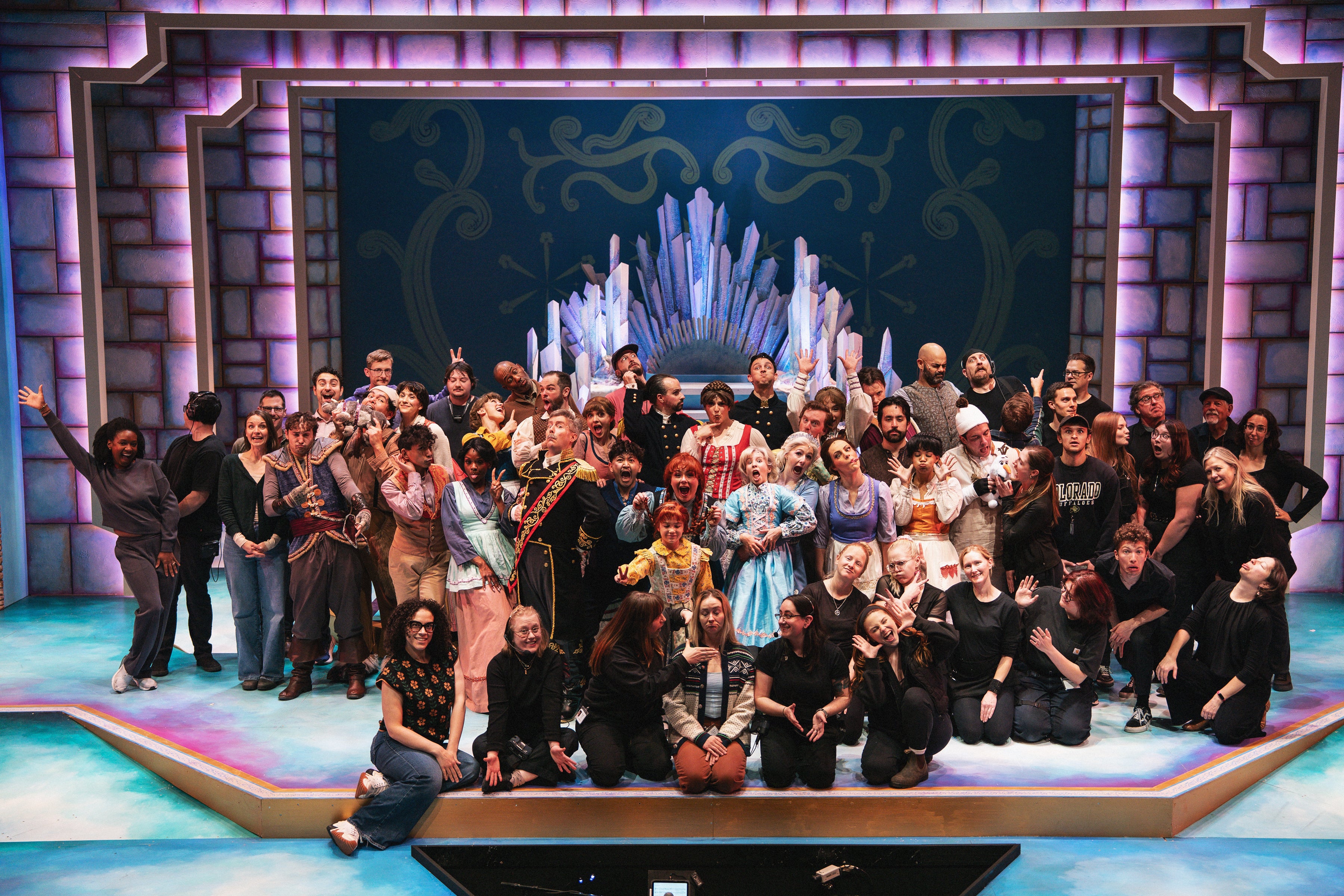
After seeing Disney’s Frozen from several behind-the-scenes vantage points, I came away with a new appreciation for the unsung heroes of live theatre. Musicians, technicians, stage managers, craftspeople, and crew make the magic possible every night. My hat is off to all of them. They are the reason the Arvada Center is such a special place.